




We work alongside you every day. That’s why safety isn’t just an internal policy — it’s a commitment to the farmers and communities we serve.
Safety is part of how we do business every day. From our facilities and trucks to our agronomy services and seasonal operations, we work hard to make sure our employees, customers, and neighbors can count on us to operate responsibly.
We know safety doesn’t stop at our property line. It affects your operation, your family, and the communities we all call home. That’s why we take a proactive, practical approach, focused on doing the job right, every time.
Our drivers log thousands of miles each year, often during tight timelines and challenging conditions. Safety on the road is a responsibility we take seriously.
Our transportation safety efforts include:
Ongoing driver training and certification
Compliance with hours-of-service and fatigue management requirements
Defensive driving practices and seasonal readiness training
Equipment inspections and maintenance standards
You share the road with our trucks every day. Our goal is to ensure they’re driven by trained professionals who respect your safety and everyone else’s.
Our team ensures appropriate training is provided, communicated and presented to best equip and protect our employees, facilities, and communities.
Since 1964, Purdue University has recorded more than 800 cases of flowing grain entrapments. Many, if not most “non-fatal” incidents go unreported. The U.S. averages 15-20 documented entrapments per year based on 40 years of data. An estimated 55% of documented grain entrapments result in death. Based on historical data, roughly 70% of the documented entrapments occur on farms.
The goal of this document is provide insight into preventing grain entrapments and understanding how three types of entrapments occur. Severe injuries and deaths can be avoided with a constant commitment to basic safety measures and situational awareness. Every flowing grain entrapment is a preventable incident.
Secondary containment and a load-out facility are required when bulk pesticide storage capacity exceeds 500 gallons. Even if secondary containment is not required, a custom applicator must have a load-out facility when using pesticides from original containers larger than 3 gallons or when using pesticide or fertilizer mixtures of more than 100 gallons.
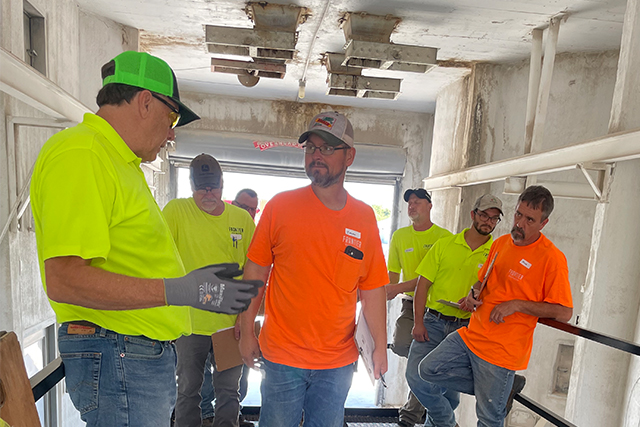
We're committed to helping our farmer owners implement safety protocols on their operations. As a farmer, if you ever have a question about safety then you should call the safety and compliance team at Frontier and we'll help you find a solution to whatever safety need you may have.
Question, comment, or concern? Please contact:
Cody Hull
Assistant VP of Safety and Compliance